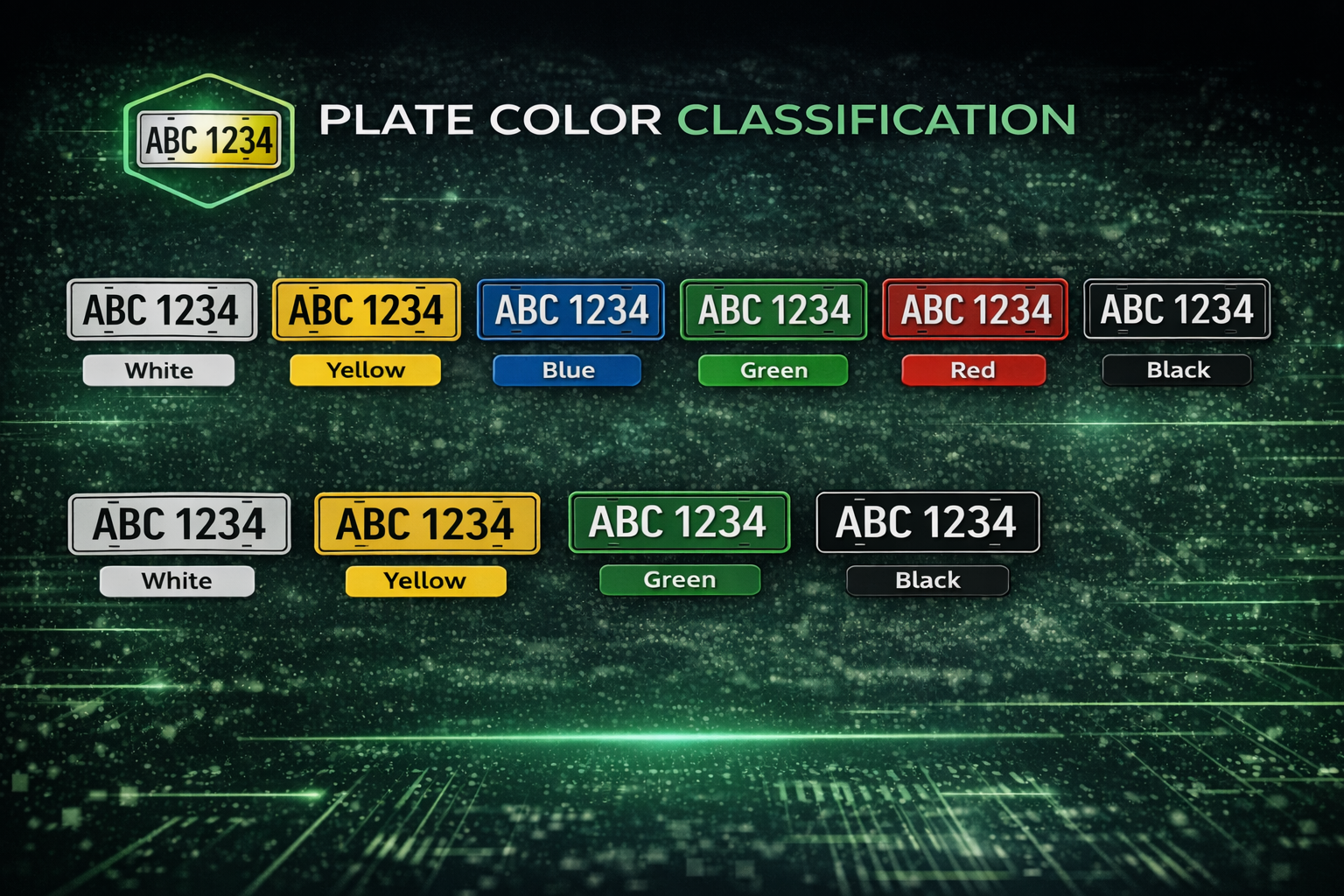
Plate Color Classification for Modern License Plate Recognition Systems
In most vehicle recognition projects, the main focus is usually on reading the plate number. However, in many real-world applications, recognizing the plate characters alone is not enough. In security systems, traffic monitoring, parking automation, municipal projects, and access control platforms, plate color classification can provide an additional and highly valuable layer of information.
Plate Color Classification is an AI-powered image analysis process that automatically identifies the color category of a license plate. This technology helps classify plates based on their visual appearance and supports more advanced filtering, verification, and reporting functions in ANPR / LPR systems.
In modern deployments, plate color recognition can play an important role alongside standard OCR-based plate reading.
Why Plate Color Classification Matters
Traditional ANPR systems are mainly designed to detect and read license plate numbers. While this is the core function, many operators also need additional data such as:
- What type of plate is this?
- Which color group does the plate belong to?
- Is it a standard civilian plate, an official plate, or a special category plate?
- How can similar-looking plate numbers be verified more accurately?
- How can users filter plate records based on color information?
This is where plate color classification becomes an important extension of the standard license plate recognition pipeline.
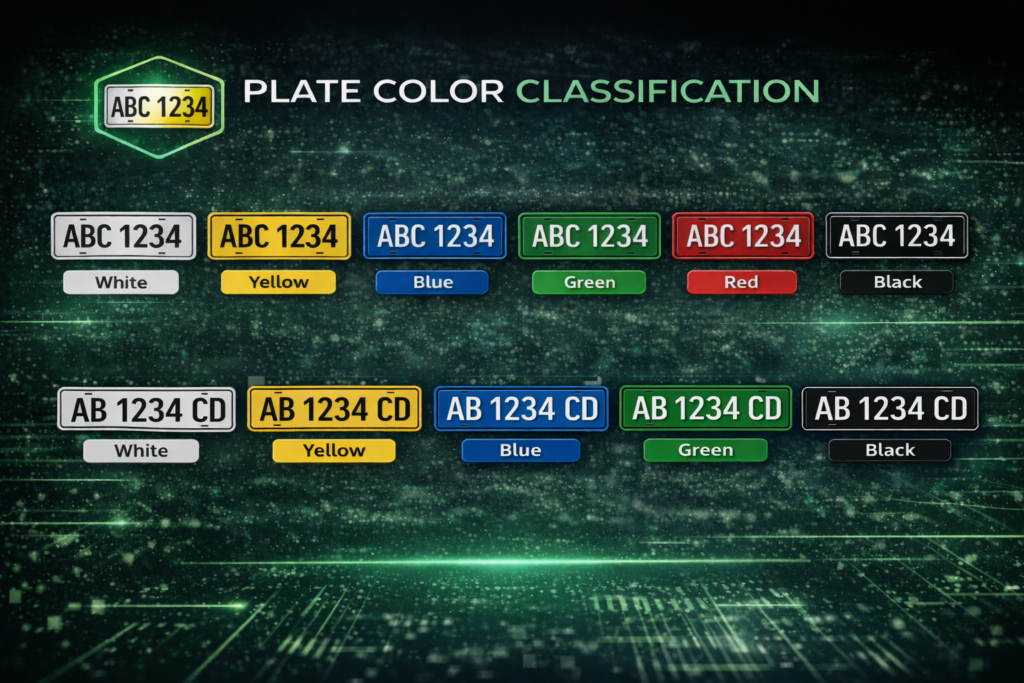
In many projects, the system is expected not only to read the plate number, but also to determine whether the plate belongs to a specific color class such as white, yellow, blue, red, or other special categories. This can be highly useful for both operational workflows and database reporting.
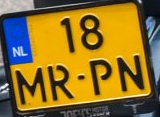
Square Netherlands Yellow Plate
How Plate Color Classification Works
A typical plate color classification workflow includes several steps:
1. Vehicle or plate detection
The system first detects the vehicle or directly locates the license plate area in the image.
2. Plate region extraction
Once the plate is detected, the plate region is cropped and prepared for classification.
3. Color analysis and classification
An AI model or image processing pipeline analyzes the dominant visual color characteristics of the plate and assigns it to a predefined category.
4. Combining the result with ANPR data
The plate color result can then be stored together with other metadata such as:
- plate number
- timestamp
- camera name
- vehicle image
- vehicle make
- vehicle color
- vehicle type
This allows operators to search, filter, and review records using more than just the plate text.
Where Plate Color Classification Can Be Used
Plate color classification can be valuable in many different applications:
Security systems
Vehicles can be filtered or flagged based on plate color classes.
Parking and gated community systems
Authorized or restricted vehicle groups can be managed more efficiently.
Municipal and public sector projects
Different plate categories may need to be handled differently in traffic or public safety systems.
Traffic monitoring systems
Plate color can serve as an additional verification layer in investigations and incident review.
Reporting and analytics
Operators can generate reports based on plate color distribution over time, by location, or by event type.
Advantages of Plate Color Classification
Adding plate color recognition to an ANPR platform offers several benefits:
- Better distinction between different plate categories
- Stronger search and filtering capabilities
- Improved verification in security workflows
- Richer database records
- More useful analytics in large-scale deployments
In many field applications, storing only the plate text is not enough. Plate color adds more context and can improve the overall usefulness of the system.
Challenges in Real-World Conditions
Like other computer vision tasks, plate color classification can become challenging under real-world conditions such as:
- night scenes
- glare from headlights
- motion blur
- low resolution
- dirty or damaged plates
- shadows
- changing weather and lighting conditions
- non-ideal camera angles
For this reason, a reliable plate color classification system must be trained and optimized using real field data collected under diverse environmental conditions.
AI-Based Plate Color Classification
Modern plate color classification systems are usually built with AI-based models. Instead of relying only on simple pixel thresholding, these systems learn from real examples and become more robust across different cameras, lighting conditions, and plate designs.
An AI-powered approach makes it possible to:
- adapt to different field environments
- distinguish visually similar tones more accurately
- improve performance under challenging conditions
- retrain the system for country-specific or project-specific plate formats
This makes AI-based plate color recognition especially valuable for real-time ANPR systems deployed in operational environments.
How Plate Color Classification Works Together with ANPR
The best results are achieved when plate color classification works together with the main ANPR / LPR system.
In a complete vehicle analytics pipeline, the system can generate multiple outputs at the same time:
- plate number
- plate color
- vehicle make
- vehicle color
- vehicle type
- timestamp
- camera information
- event image
This enables operators not only to answer the question “Which plate passed?”, but also “What type of plate was it?”
That additional context can be highly valuable in security, traffic enforcement, and operational reporting.
Industrial Cortex Approach
At Industrial Cortex, we focus not only on OCR performance, but also on the additional layers of intelligence that make vehicle recognition systems more practical in the field.
Plate Color Classification is one of the supporting technologies that can make license plate recognition systems more searchable, more verifiable, and more useful for operators.
This approach creates strong value in projects such as:
- smart city traffic systems
- parking automation
- gated community access control
- municipal and public safety platforms
- site security and vehicle analytics solutions
Download Sample Plate Color Classfication Dataset
Conclusion
Plate Color Classification is an important complementary component of modern license plate recognition systems. Systems that go beyond simple plate reading and also analyze visual plate attributes can provide much stronger results for security, operations, filtering, and reporting.
In real-world deployments, plate color information adds another layer of context to ANPR data and helps operators make faster and more accurate decisions.
If you are looking for advanced solutions in ANPR / LPR, Plate Color Classification, Vehicle Make Recognition, Vehicle Color Recognition, and Vehicle Type Recognition, Industrial Cortex can support your project with real-world computer vision technologies.